Manananggal
CHAPTER 1 OF 5
Tiktik
Page 1 / 16
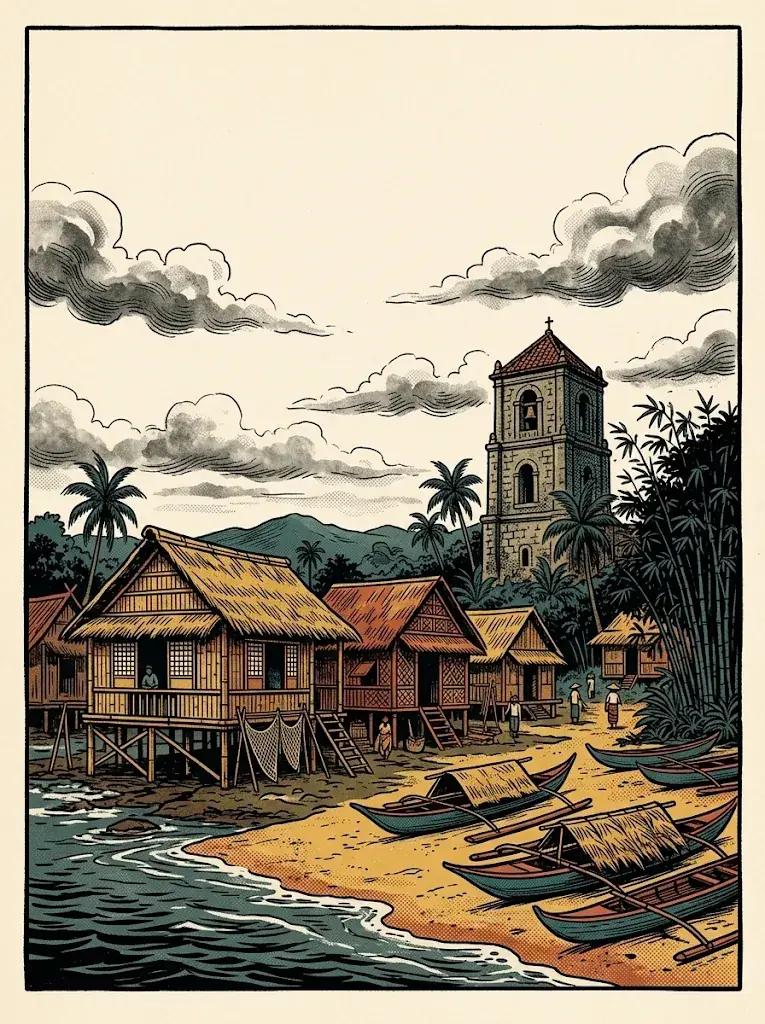
Capiz, on the island of Panay, in the 1880s. The Philippines is still under Spanish rule.Capiz, sa isla ng Panay, dekada 1880. Sakop pa ng Espanya ang Pilipinas.
Capiz shell: the thin, clear shell of the windowpane oyster. Houses used it in their windows in place of glass.Capiz: ang manipis at malinaw na kabibe ng windowpane oyster. Ginagamit ito sa bintana kapalit ng salamin.
In Barrio Lunhaw, people shut their windows twice: once for the wind, once for the night.Sa Baryo Lunhaw, dalawang beses nagsasara ng bintana ang mga tao: isa para sa hangin, isa para sa gabi.
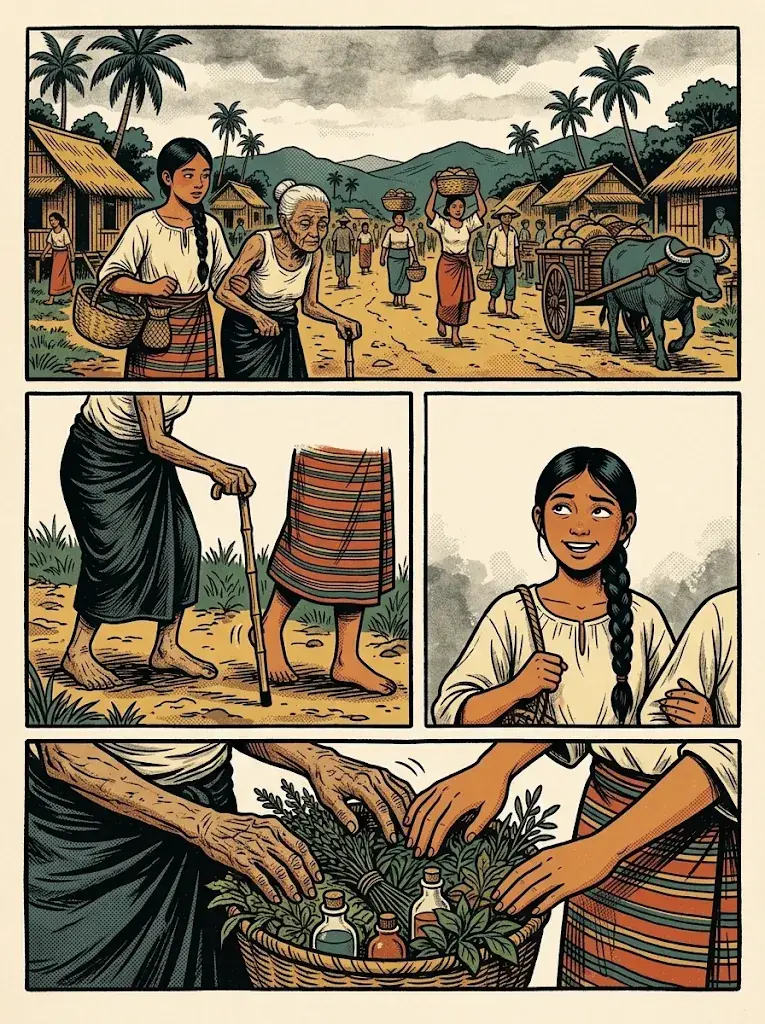
Tala, granddaughter of the barrio hilot.Si Tala, apo ng hilot ng baryo.
Your feet are loud, child. A hilot walks soft.Ang lakas ng yabag mo, anak. Ang hilot, mahina lumakad.
A hilot walks fast too, Lola. When she's late.Mabilis din po lumakad ang hilot, Lola. Pag nahuhuli na.
Hilot: a traditional healer who eases pain and sets bones by touch. In many towns the hilot also helped women give birth.Hilot: tradisyonal na manggagamot na nagpapagaan ng sakit at nag-aayos ng buto sa haplos. Sa maraming bayan, hilot din ang nagpapaanak.
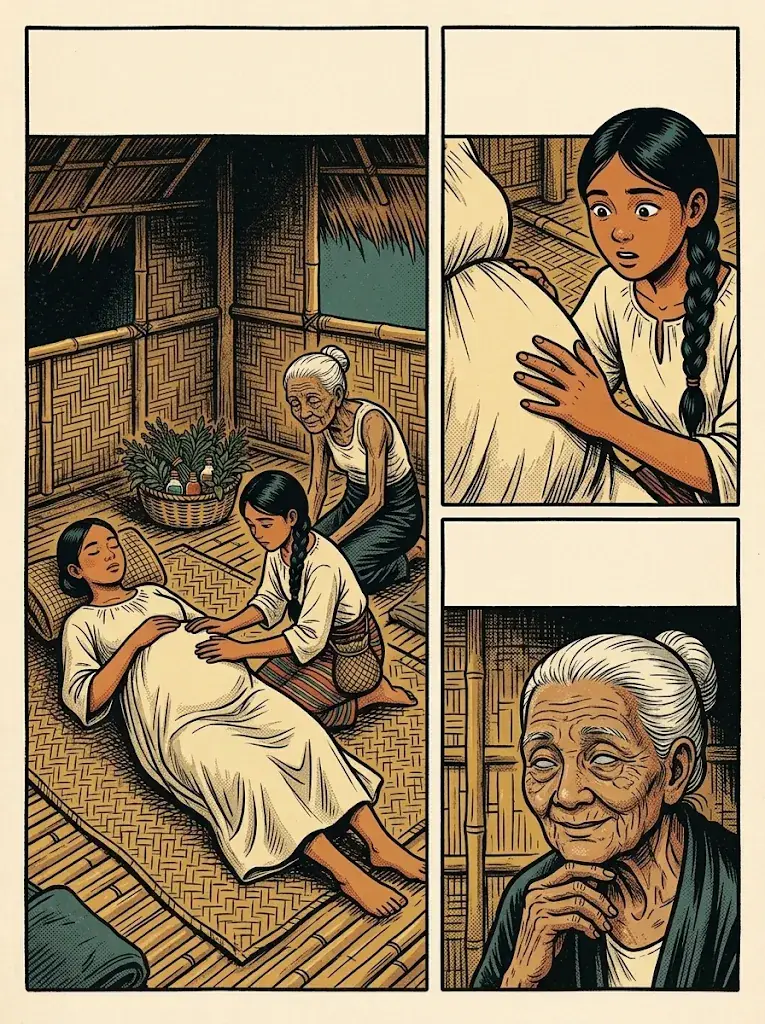
Inday: a Hiligaynon word for a girl. Families use it as a pet name.Inday: salitang Hiligaynon para sa batang babae. Ginagamit din itong palayaw.
Well, Inday? Is he being good in there?O, Inday? Mabait ba siya d'yan?
He's turned! Head down!Umikot na siya! Pababa na ang ulo!
You felt it before I did. Good.Naunahan mo pa ako. Mabuti.
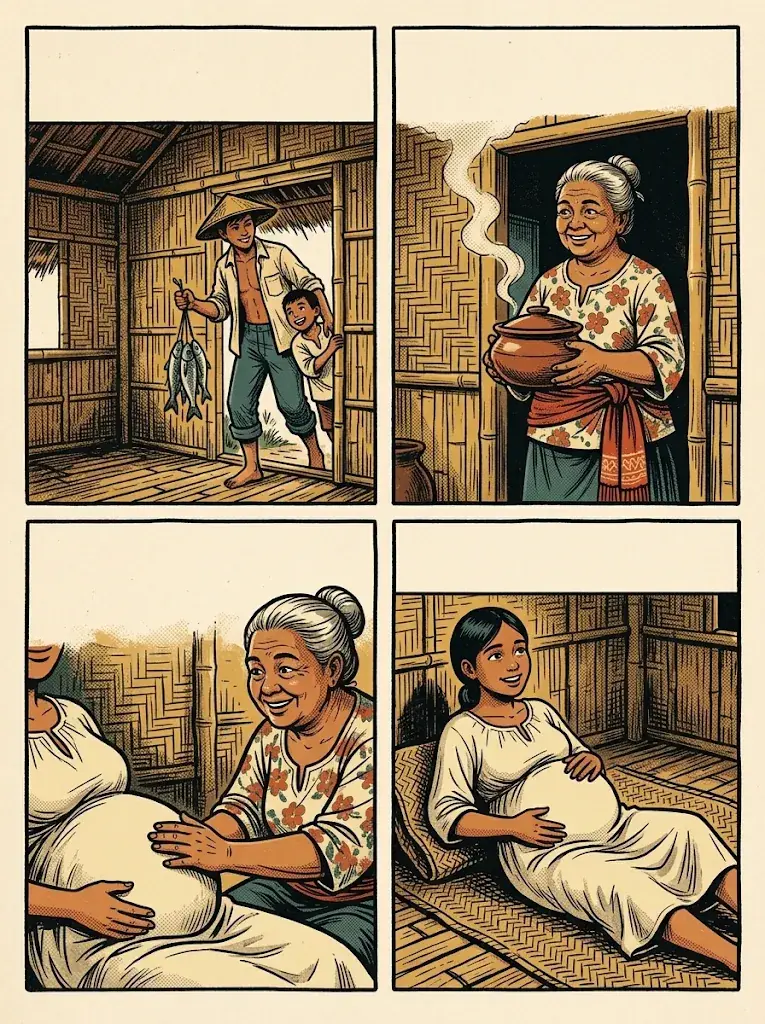
Salabat! Ginger keeps the baby warm.Salabat! Pampainit 'yan sa bata.
Salabat: hot ginger tea, a common home drink in the Philippines.Salabat: mainit na tsaang luya, karaniwang inumin sa bahay.
So when's this one coming, hija?Kailan ba lalabas 'tong batang 'to, hija?
By the next full moon, Lola says.Sa susunod na kabilugan po, sabi ni Lola.
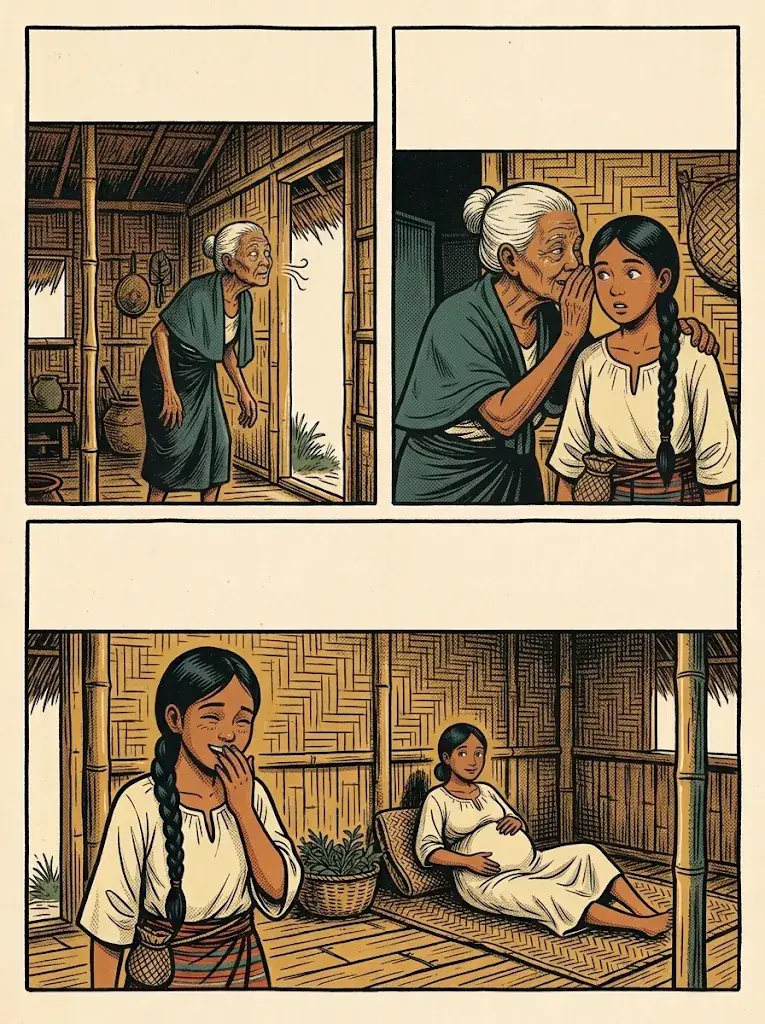
The baby's close. From tonight, salt at the door.Malapit na ang bata. Simula ngayong gabi, asin sa pinto.
Lola, nobody does that anymore.Lola, wala na pong gumagawa n'yan.
People who skip it sleep just fine. Until one night they don't.Mahimbing ang tulog ng mga hindi naniniwala. Hanggang isang gabi, hindi na.
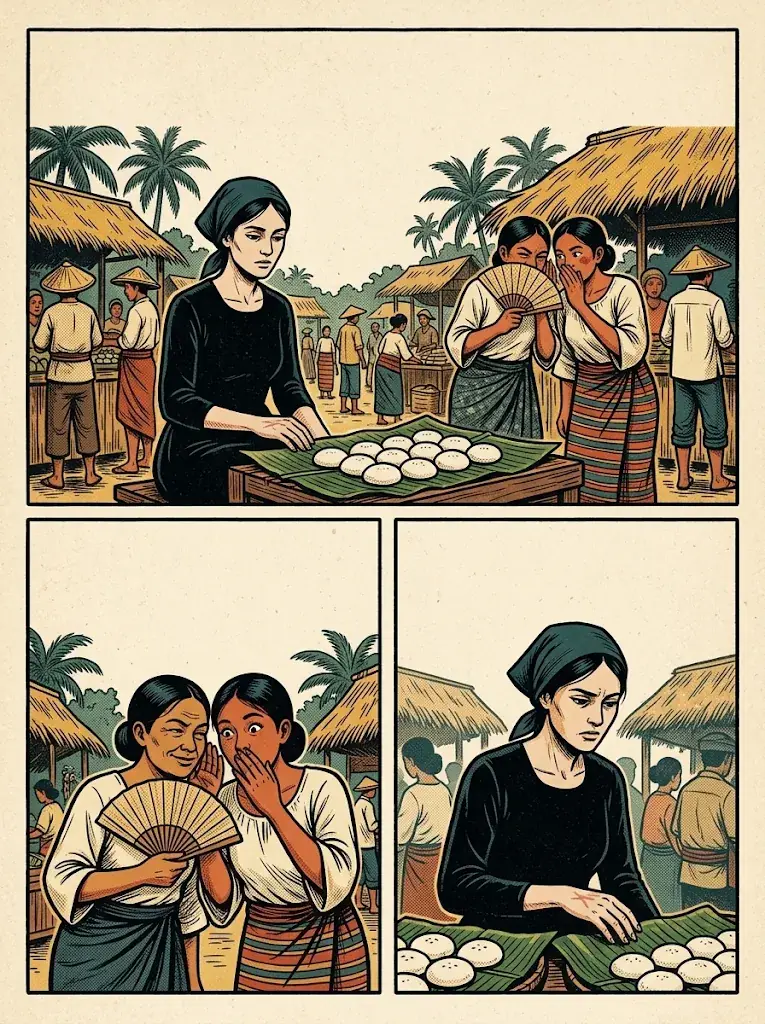
That's her. The widow from Antique.Siya 'yon. 'Yung biyuda galing Antique.
Puto: a soft steamed rice cake, sold in markets all over the islands.Puto: malambot na pinasingawang kakaning bigas, tinitinda sa mga palengke sa buong kapuluan.
Her husband died in one night, they say. Dry as a leaf.Isang gabi lang daw, patay na ang asawa. Tuyot na parang dahon.
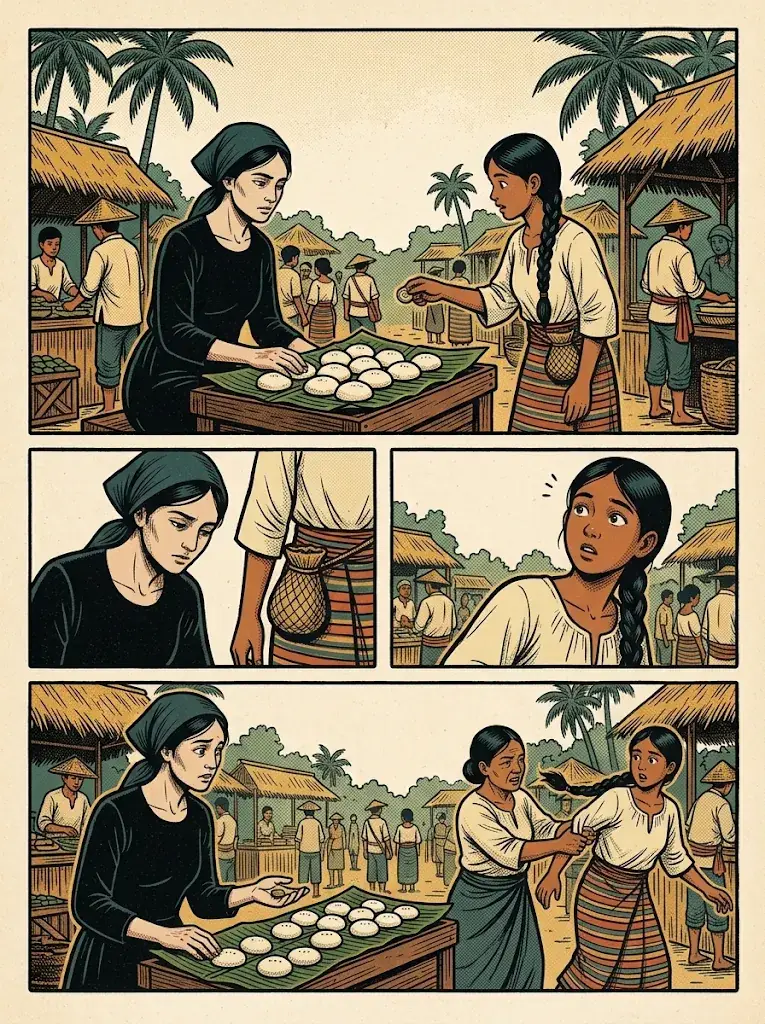
Lagundi in your pouch. Someone's got a cough?Lagundi 'yang nasa supot mo. May inuubo ba?
Lagundi: a shrub whose leaves are a common Philippine remedy for cough.Lagundi: halamang palumpong na karaniwang gamot sa ubo ang dahon.
You know plants?Marunong po kayo sa halaman?
Don't eat anything she sells, Inday!'Wag kang kakain ng kahit anong tinda n'yan, Inday!
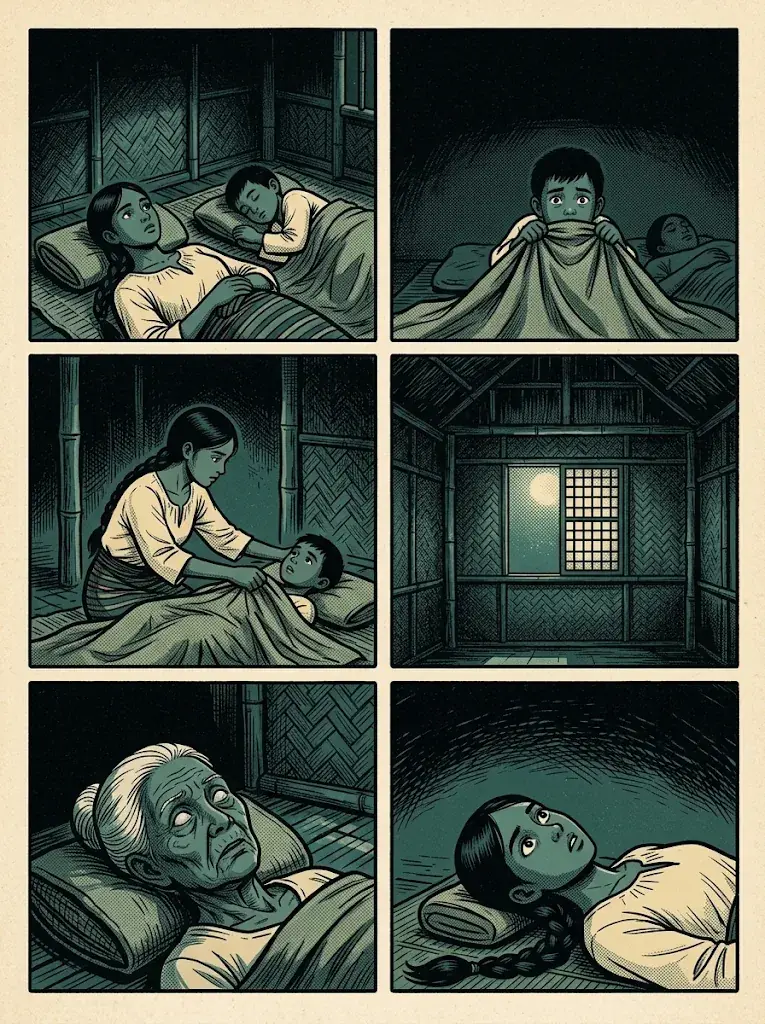
TIK... TIK...
Ate... what's that?Ate... ano 'yon?
Ate: what Filipinos call an older sister, or any older girl.Ate: tawag sa nakatatandang kapatid na babae, o sa mas nakatatandang dalaga.
Softer now. That means it's closer.Humihina na. Ibig sabihin, papalapit.
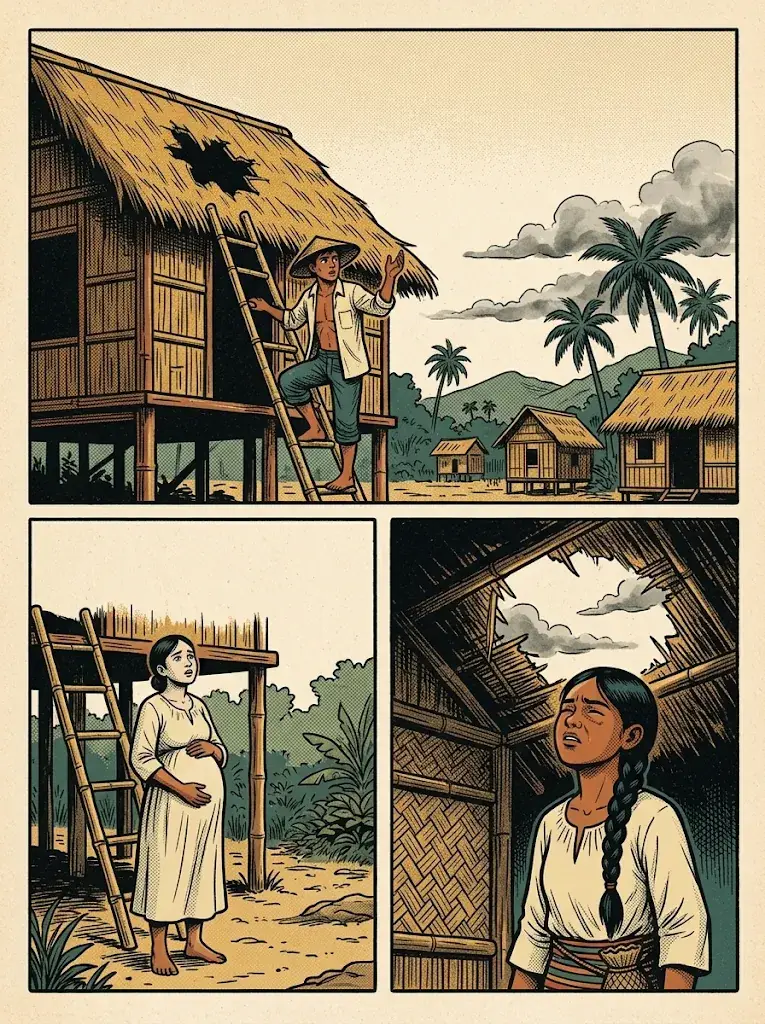
Rats. Big ones.Daga. Malalaki.
Right over my mat, Andres? Rats?Sa mismong tapat ng banig ko, Andres? Daga?
It smells like bats.Amoy paniki.
Tiktik: a night call people link to the aswang. Some say it's really bats, or the flying lemur, the kagwang.Tiktik: huni sa gabi na iniuugnay sa aswang. May nagsasabing paniki lang ito, o ang kagwang.
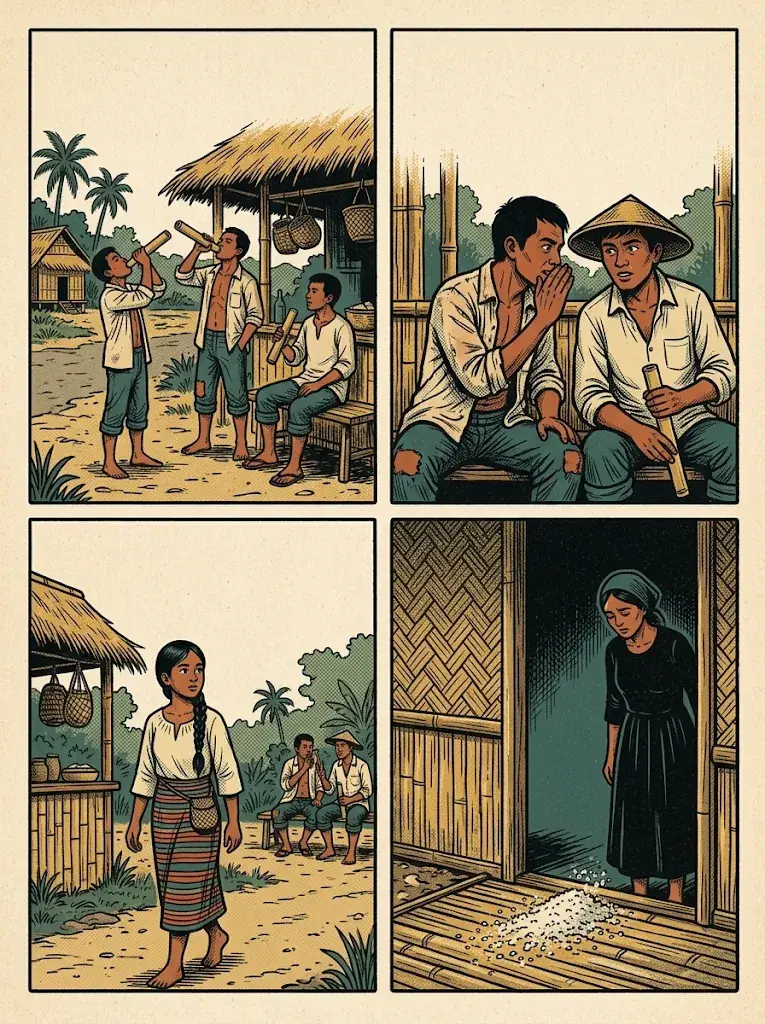
Since that widow came, the dogs howl all night.Mula nang dumating 'yung biyuda, gabi-gabi nang umaalulong ang mga aso.
Tuba: palm wine made from coconut sap.Tuba: alak na gawa sa katas ng niyog.
My cousin in Antique says they ran her out.Sabi ng pinsan ko sa Antique, pinalayas siya ro'n.
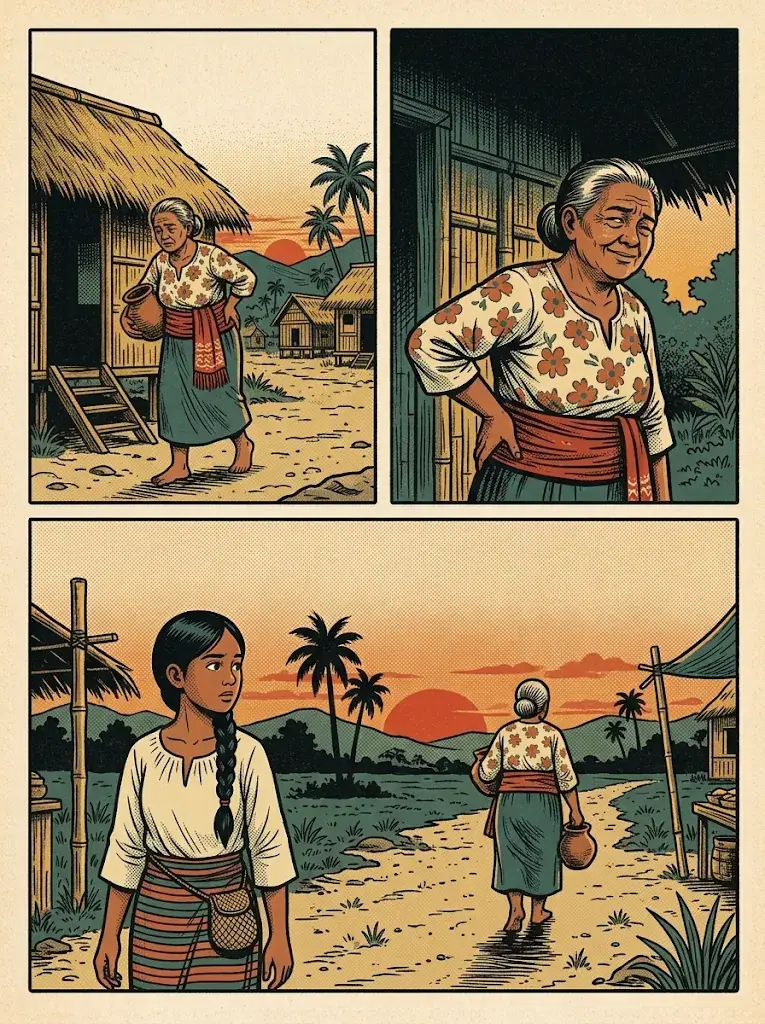
Going home already, Manang Maring?Uuwi na po kayo, Manang Maring?
Manang: Hiligaynon for an older woman, said with respect.Manang: salitang Hiligaynon para sa nakatatandang babae, tanda ng paggalang.
My back, hija. Right here. It always acts up when the sun goes down.Ang likod ko, hija. Dito mismo. Laging sumasakit pag palubog na ang araw.
The sun went down red over Lunhaw.Pulang-pula ang araw nang lumubog sa Lunhaw.
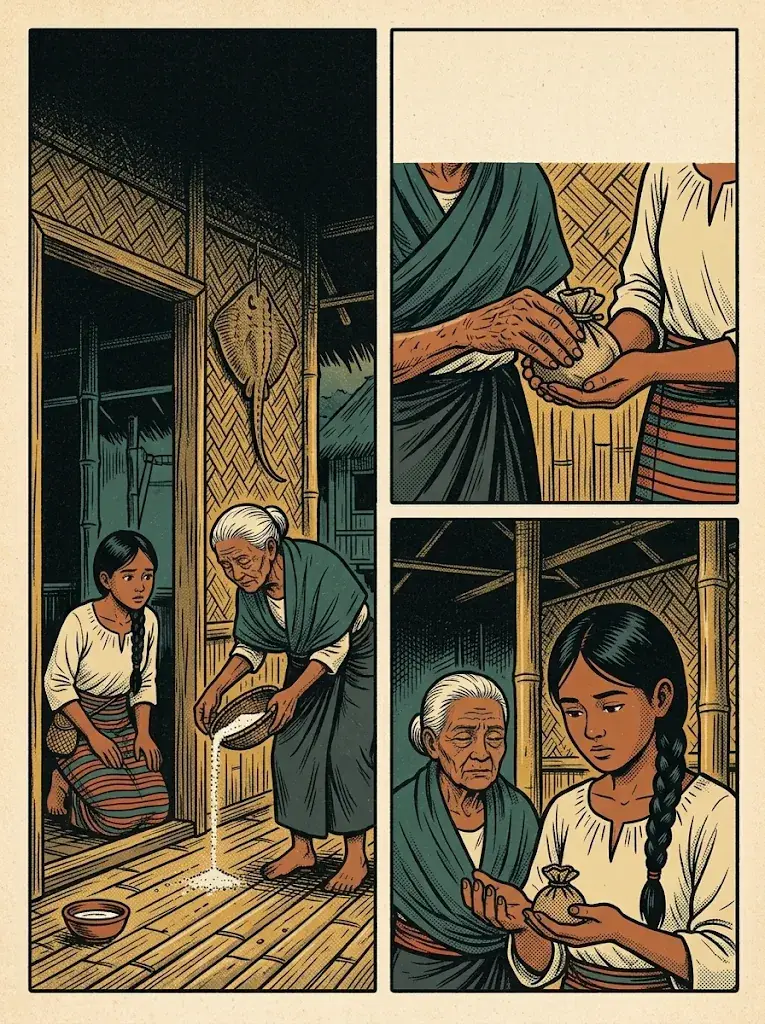
Old protections against the aswang include salt, ash, vinegar, a stingray's tail and holy objects.Kabilang sa mga lumang panangga sa aswang ang asin, abo, suka, buntot ng pagi at mga banal na bagay.
Salt for the door. Ash for the floor. And if you ever find its other half...Asin sa pinto. Abo sa sahig. At kung makita mo man ang kalahati niya...
Its other half?Kalahati niya?
Salt it. Then run.Asinan mo. Tapos tumakbo ka.
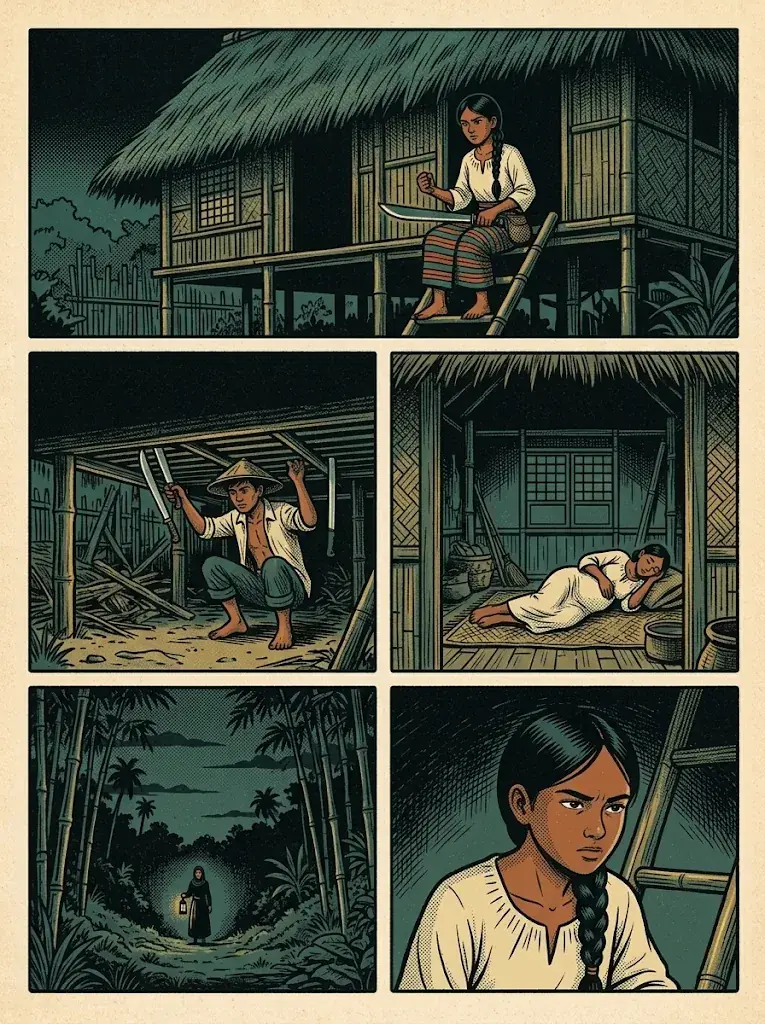
Tala had no plans to sleep that night.Walang balak matulog si Tala nang gabing 'yon.
Some families pushed bolos between the floor slats to keep the aswang from creeping under the house.May mga pamilyang nagsusuksok ng itak sa pagitan ng sahig na kawayan para hindi makagapang ang aswang sa silong.
Where are you going this late?Saan ka pupunta nang ganitong oras?
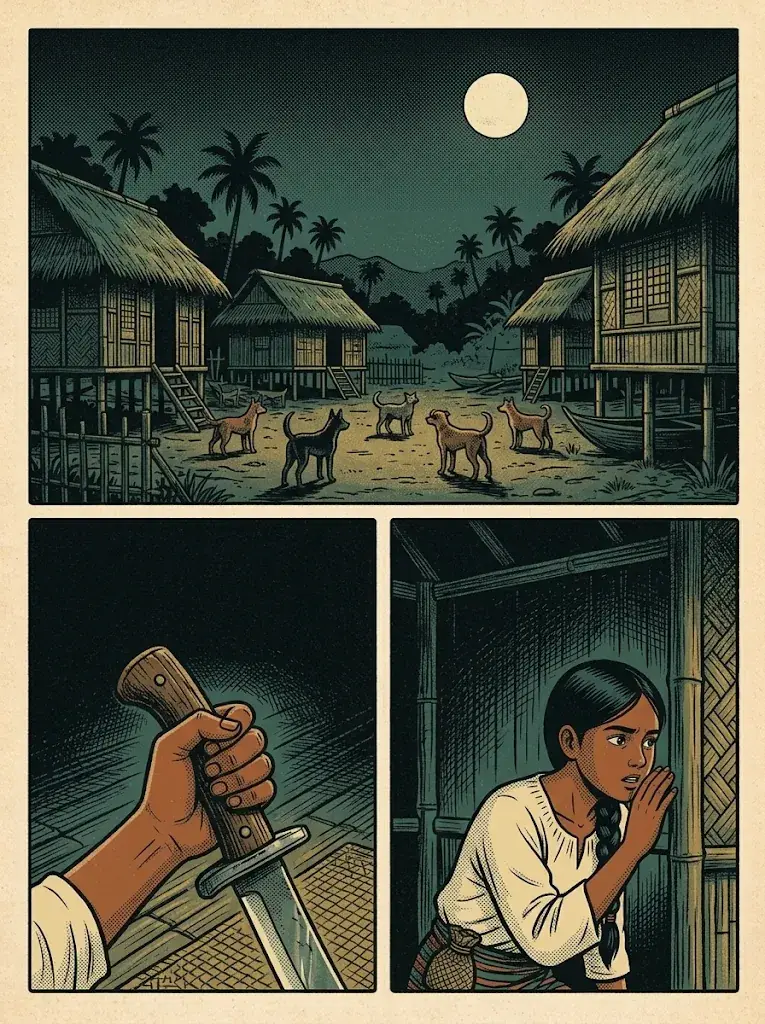
TIK... TIK...
Then every dog in the barrio went quiet at once.Tapos sabay-sabay na tumahimik ang lahat ng aso sa baryo.
tik... tik...
Softer... It's close.Humihina... Malapit na.
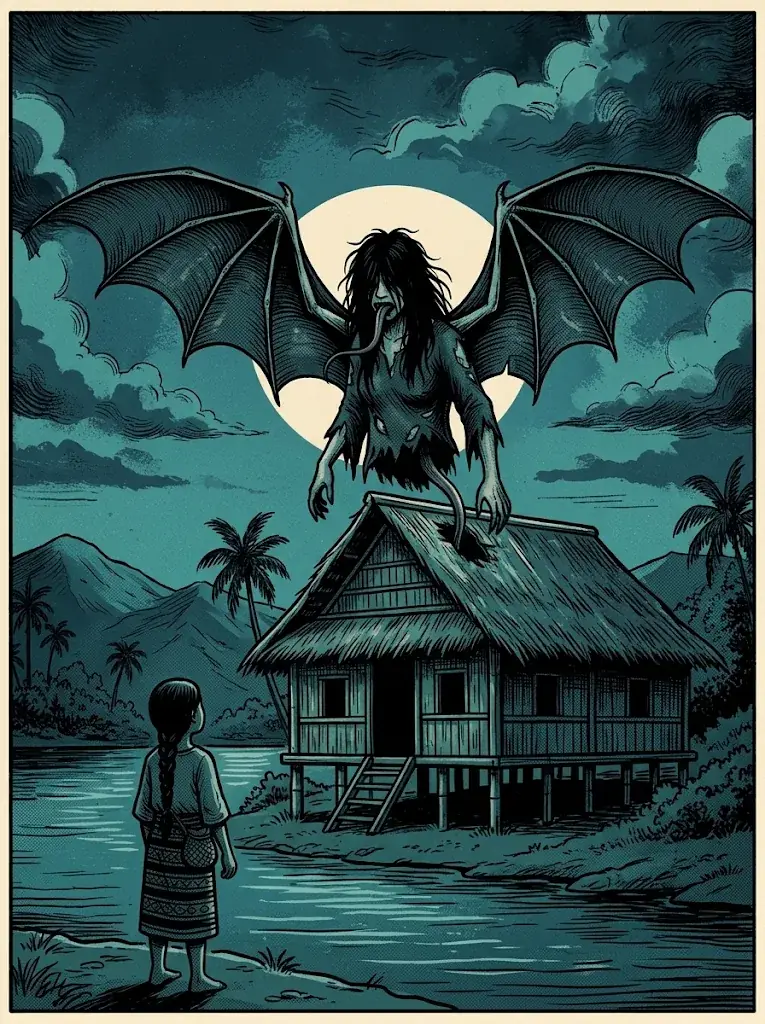
FWAP FWAP
It had come back for the baby.Bumalik ito para sa bata.
Manananggal comes from tanggal, "to remove". The creature leaves its lower body behind to fly.Galing ang manananggal sa "tanggal". Iniiwan nito ang ibabang katawan para makalipad.
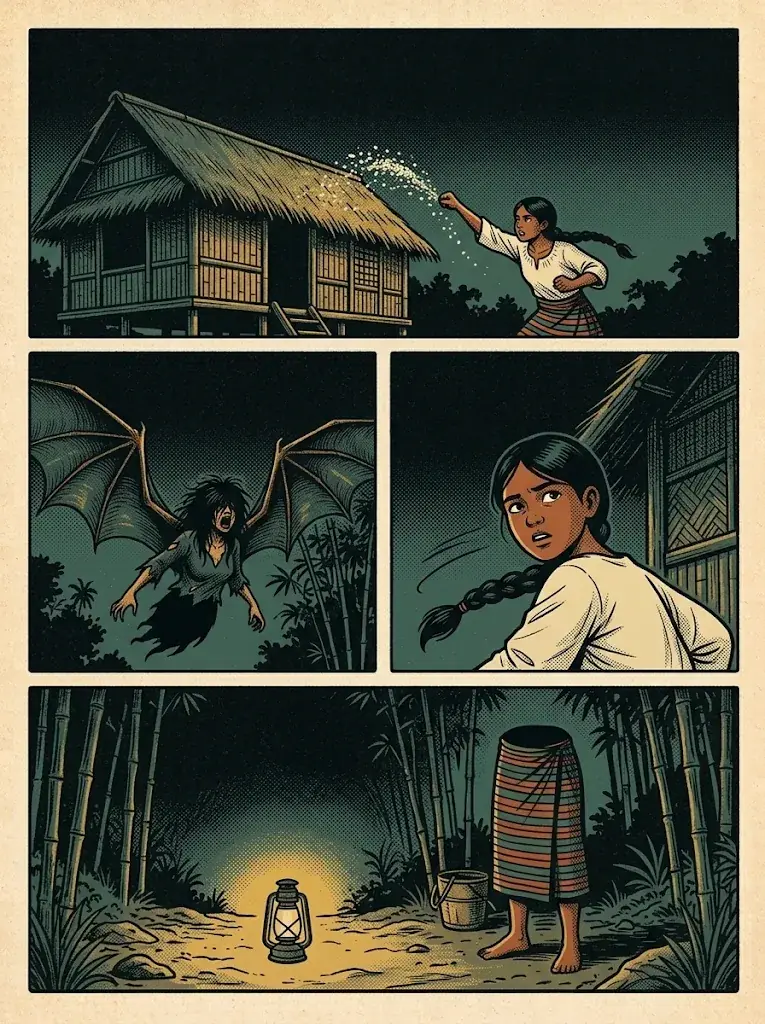
Get away from her!Layuan mo siya!
SKREEEE
In the grove, something stood very still, waiting for the rest of itself.Sa kawayanan, may nakatayong hindi gumagalaw, naghihintay sa kalahati niya.
End of Chapter 1.Katapusan ng Kabanata 1.