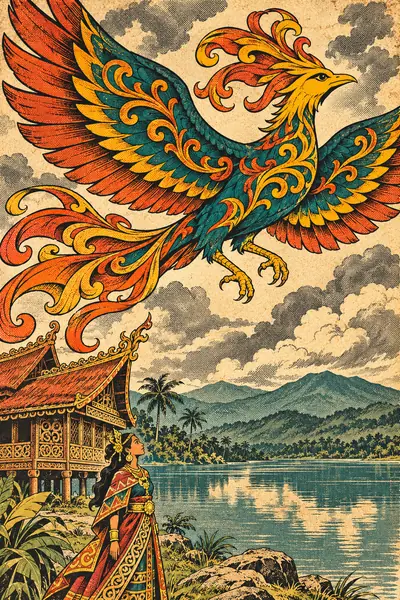
 Sarimanok
: The Bird Between Two Worlds, Chapter 5: The Carving
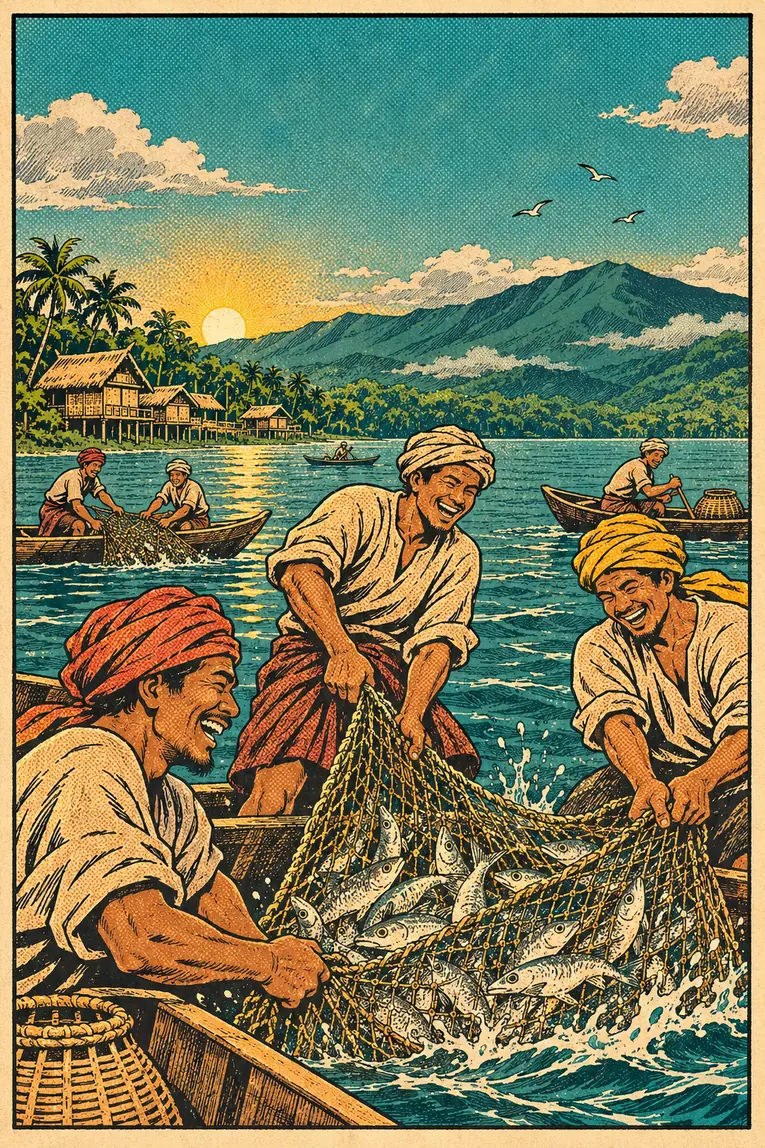
Three months later.Makalipas ang tatlong buwan.
Look at this! The lake's alive again!Tingnan n'yo 'to! Buhay na ulit ang lawa!
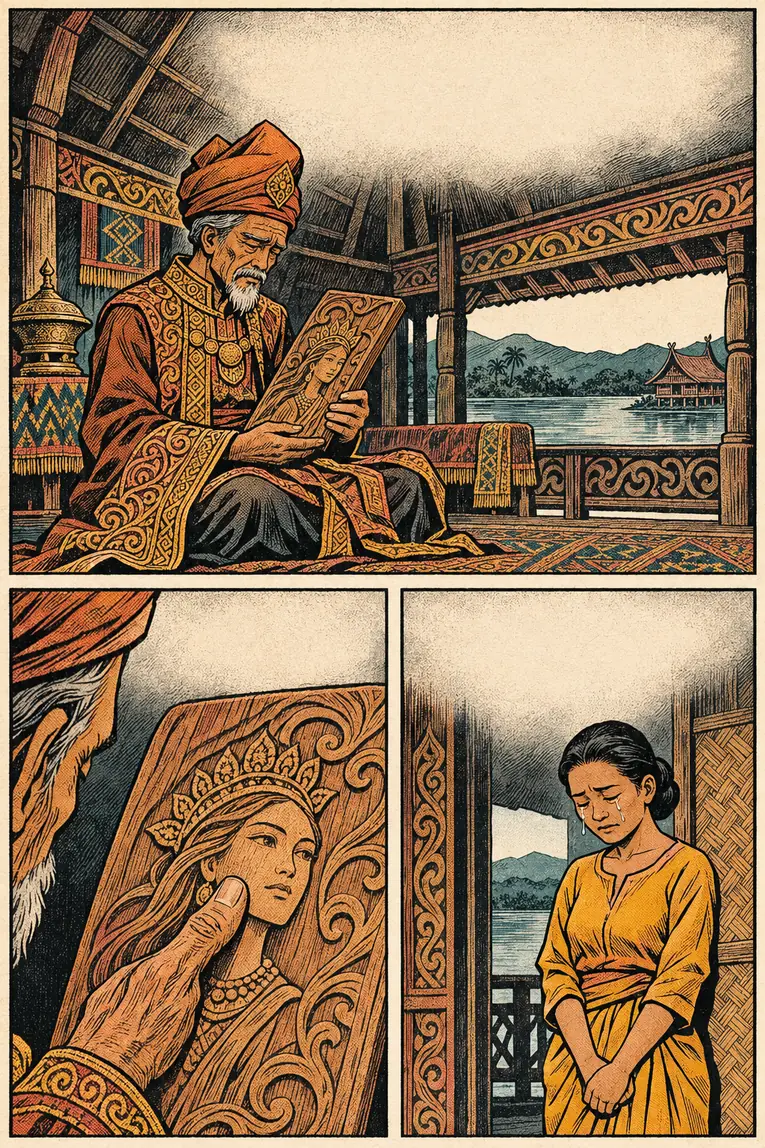
But nobody laughed in the torogan.Pero walang tumatawa sa torogan.
He hasn't eaten in two days.Dalawang araw na siyang hindi kumakain.
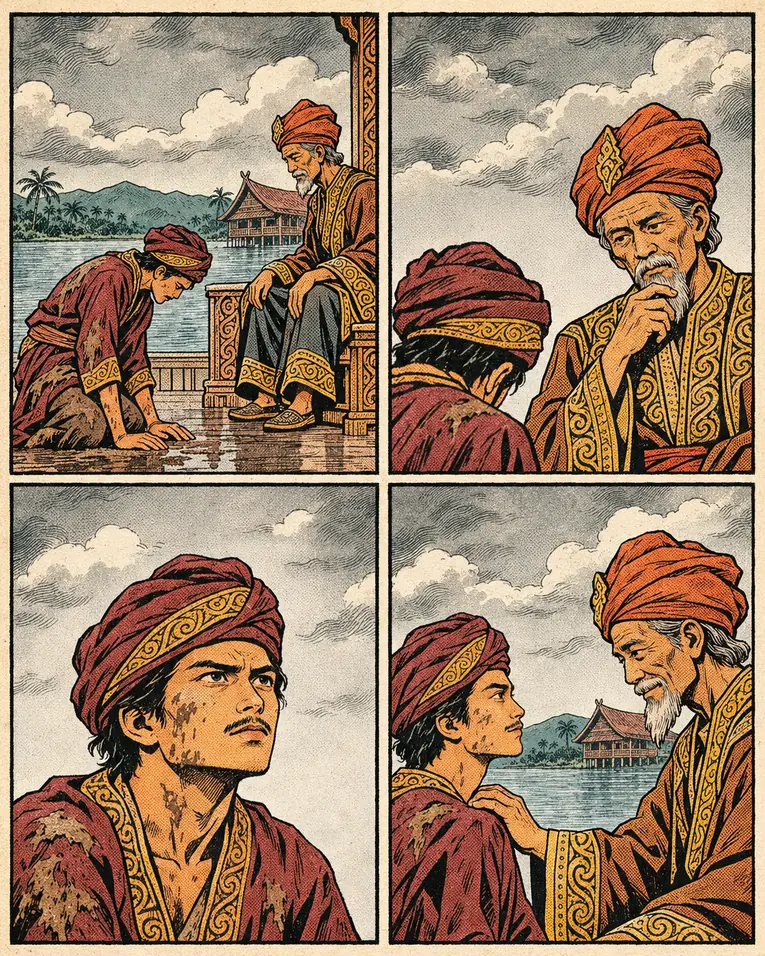
Ninety days on the water, Highness. Every island. Nothing.Siyamnapung araw sa tubig, Kamahalan. Lahat ng isla. Wala.
You could have stopped after ten.Puwede ka namang tumigil pagkatapos ng sampung araw.
She danced the singkil without a single stumble. I wanted to see her dance again.'Di siya natapilok sa singkil. Gusto ko pa siyang mapanood.
Unayan and Bayabao are friends, Datu. Wedding or no wedding.Magkaibigan ang Unayan at Bayabao, Datu. Kasal man o hindi.
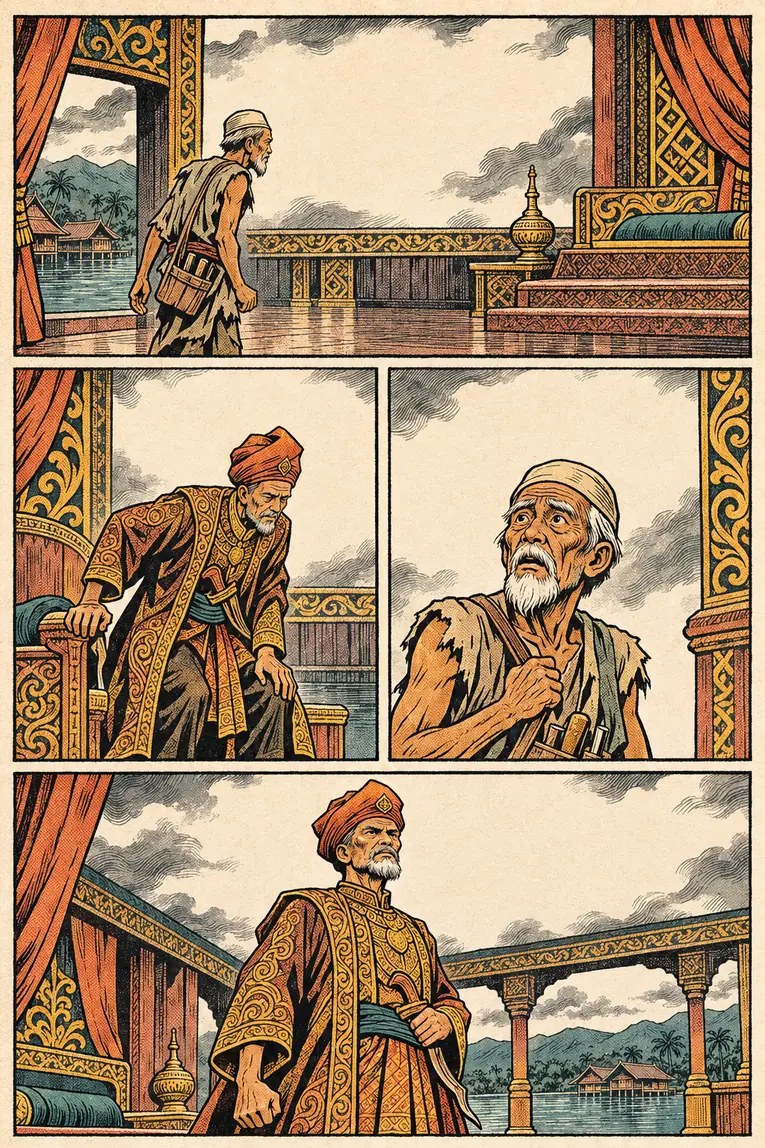
You sent for me, Highness.Ipinatawag n'yo raw ako, Kamahalan.
Carve the bird she dreamed about.Iukit mo ang ibong napapanaginipan niya.
The bird that took her?'Yung ibong kumuha sa kanya?
The bird that watched over her from the night she was born.Ang ibong nagbantay sa kanya mula nang ipanganak siya.
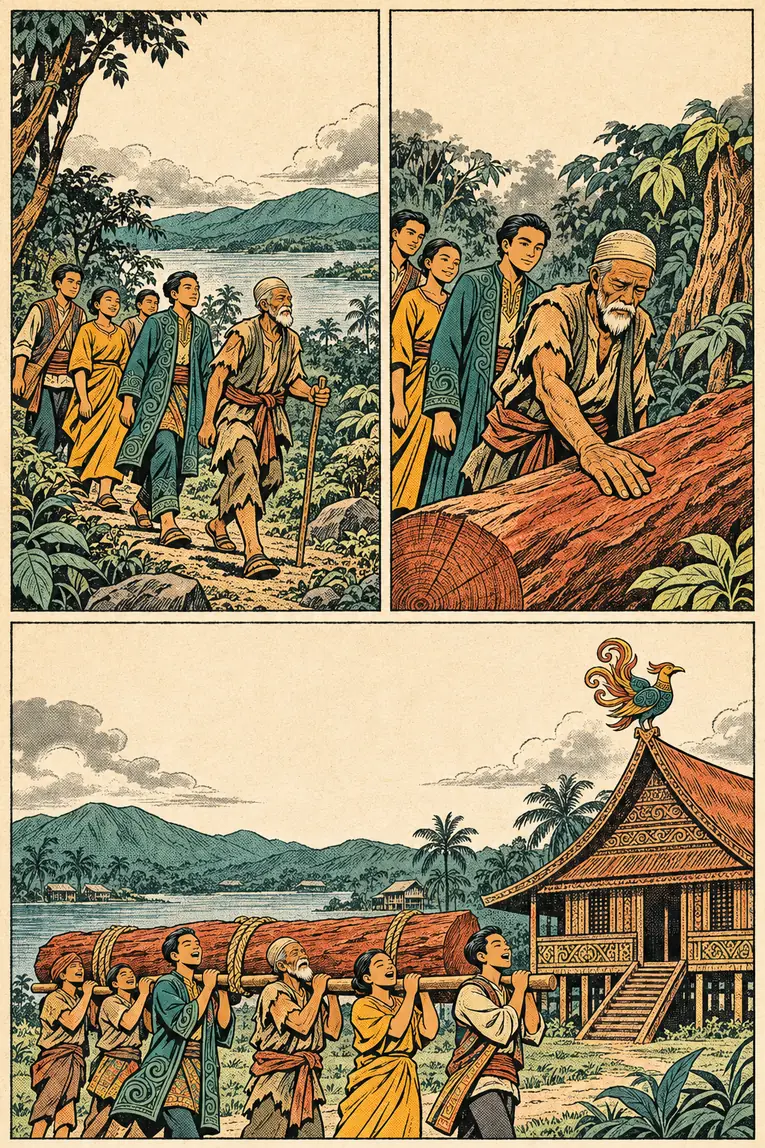
This one's been waiting for us.Matagal na tayong hinihintay ng kahoy na 'to.
Maranao carvers prefer hard, long-lasting woods such as narra for important pieces.Mas gusto ng mga manlililok na Maranao ang matigas at matibay na kahoy gaya ng narra para sa mahahalagang ukit.
Leaves, like in her carving.Mga dahon, gaya ng ukit niya.
What is it, Bapa?Ano po 'yan, Bapa?
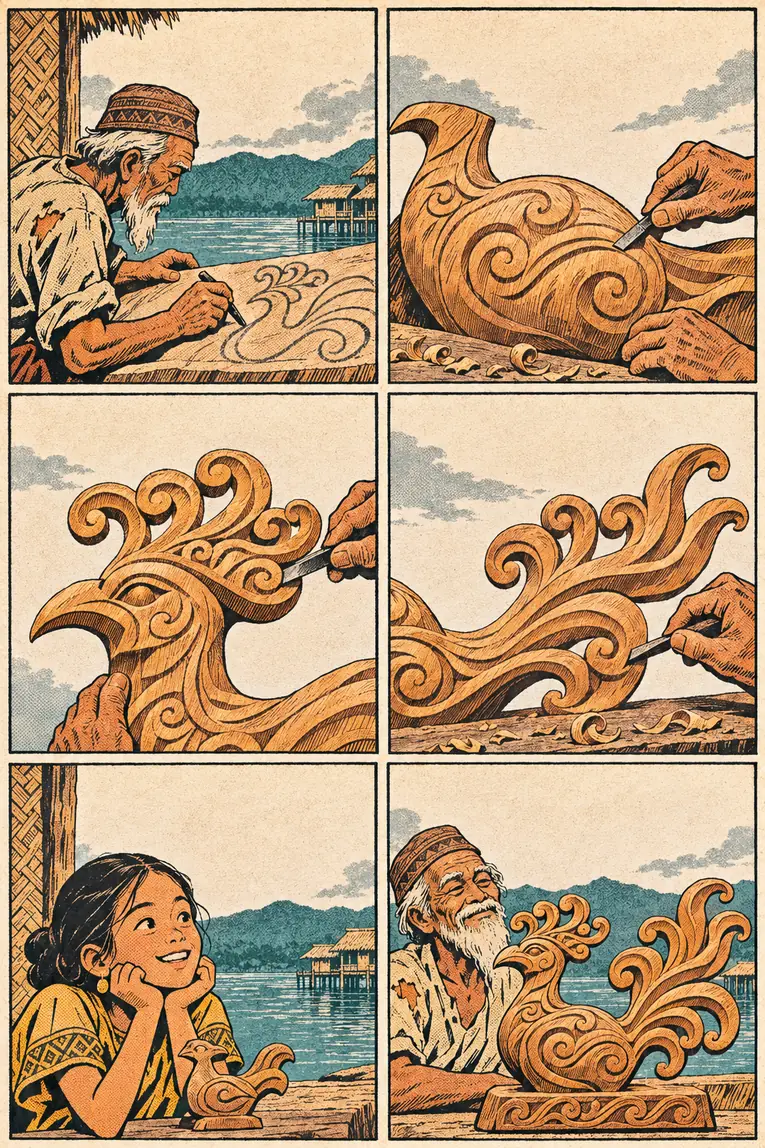
Sari's bird. The sari-manok, the bird of many colours.Ibon ni Sari. Ang sari-manok, ang ibong maraming kulay.
Sari means "of many kinds"; manok once meant any bird. So sarimanok: a bird of many colours."Sari": sari-sari, iba't iba. "Manok": tawag noon sa anumang ibon. Kaya sarimanok: ibong maraming kulay.
Show me how.Turuan mo ako.
Gently. The wood will tell you where it wants to go.Dahan-dahan. Ang kahoy ang magsasabi kung saan ka dadaan.
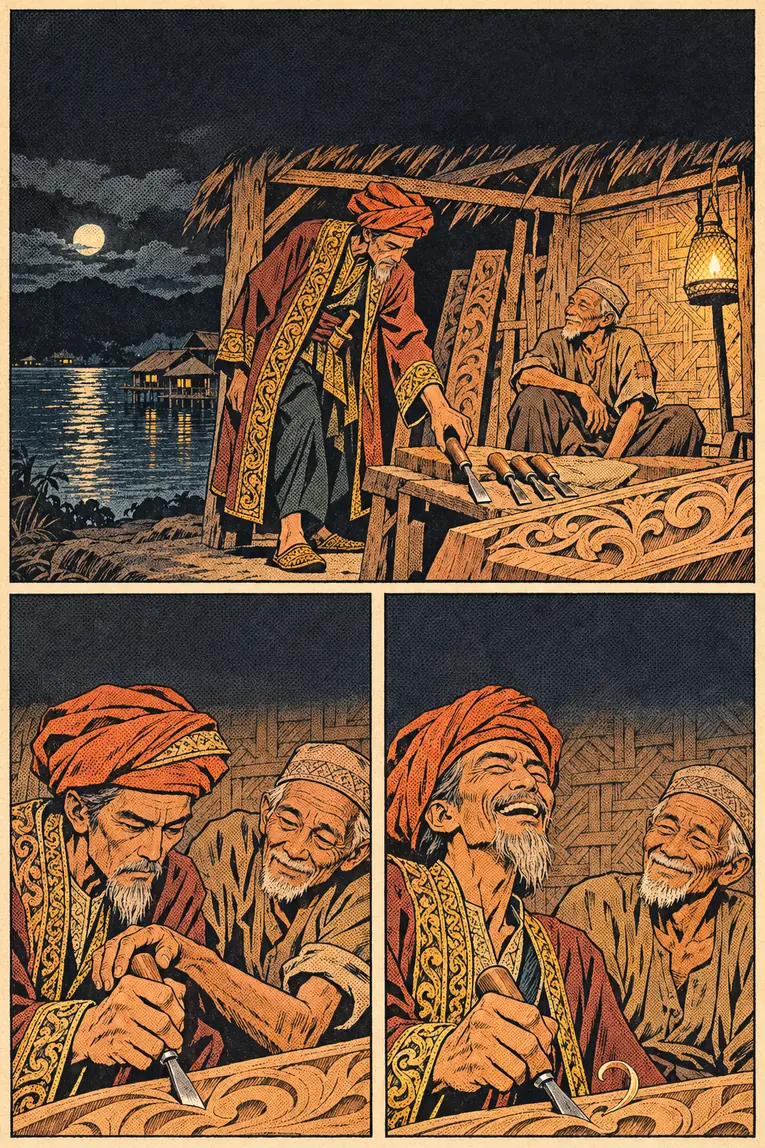
So this is what she was doing every night.Ito pala ang ginagawa niya gabi-gabi.
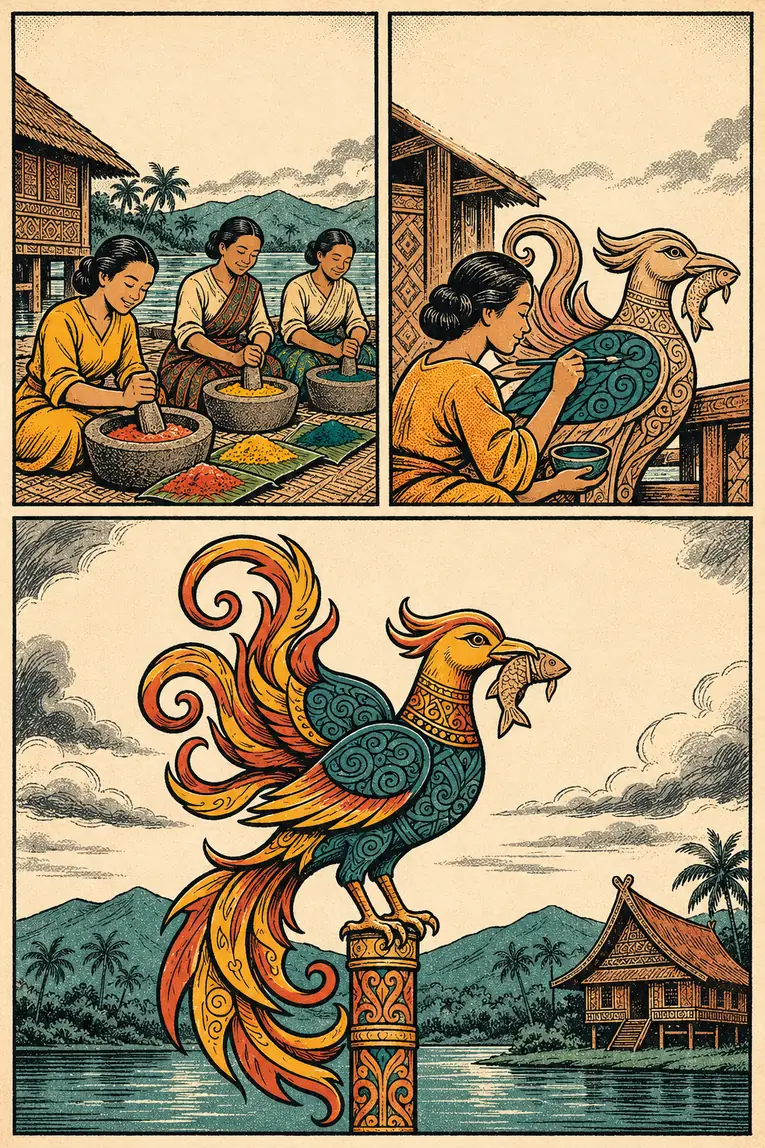
Sarimanok carvings are painted in bright colours, often red, yellow, green and blue.Pinipinturahan ng matitingkad na kulay ang mga ukit ng sarimanok, kadalasang pula, dilaw, berde at asul.
She'd want this colour. Like the feather.Ito 'yung kulay na gusto niya. Kulay ng balahibo.
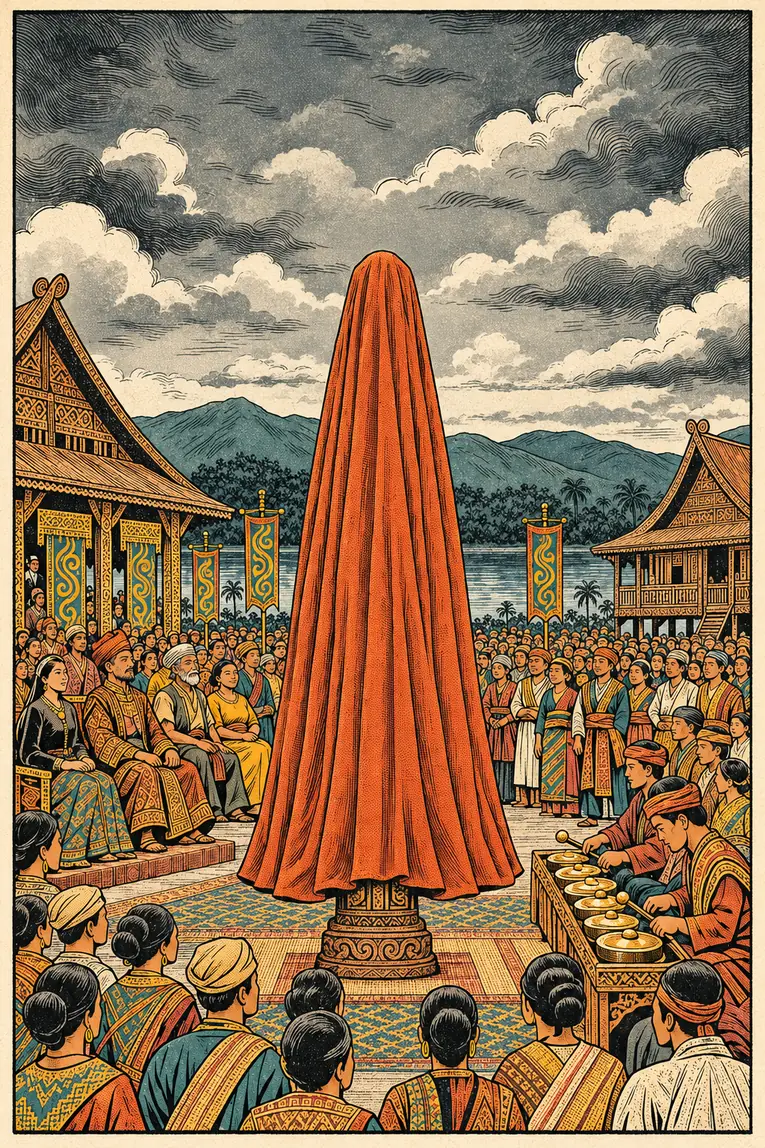
One year after the feast.Isang taon matapos ang piging.
DONG DONG TING TANG
For my daughter.Para sa anak ko.
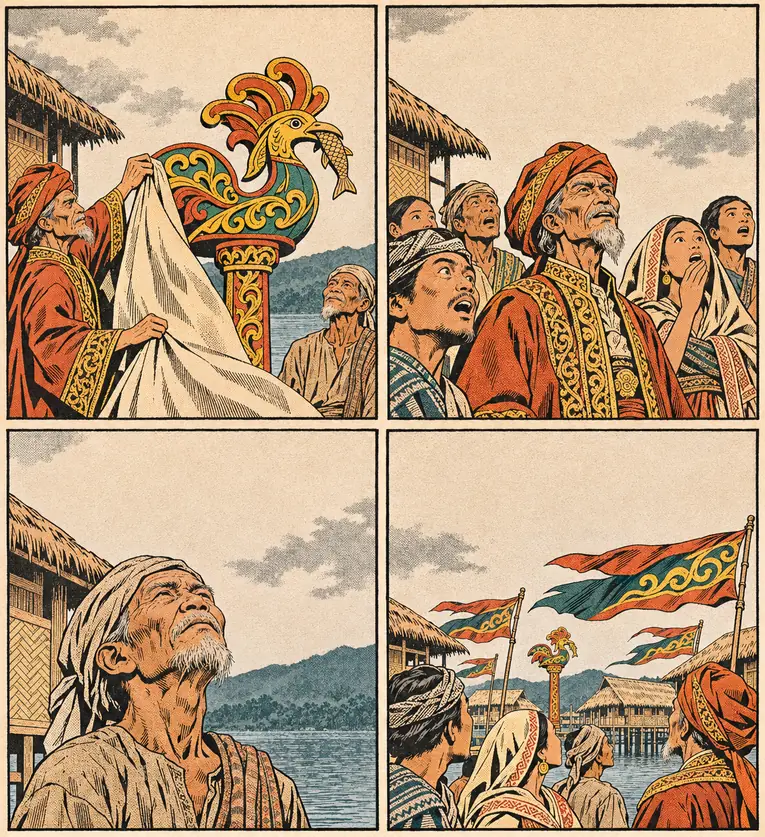
The wind's changed.Nag-iba ang hangin.
FWOOOSH
KRRRAAAAW
The bird!Ang ibon!
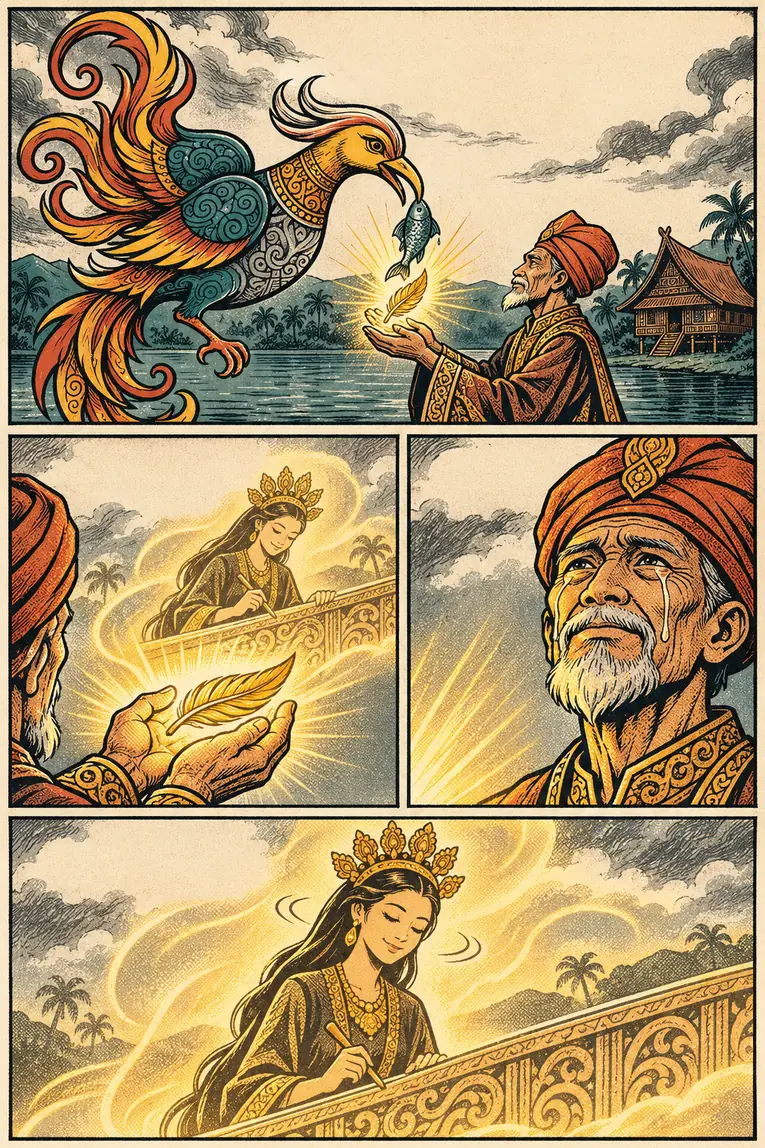
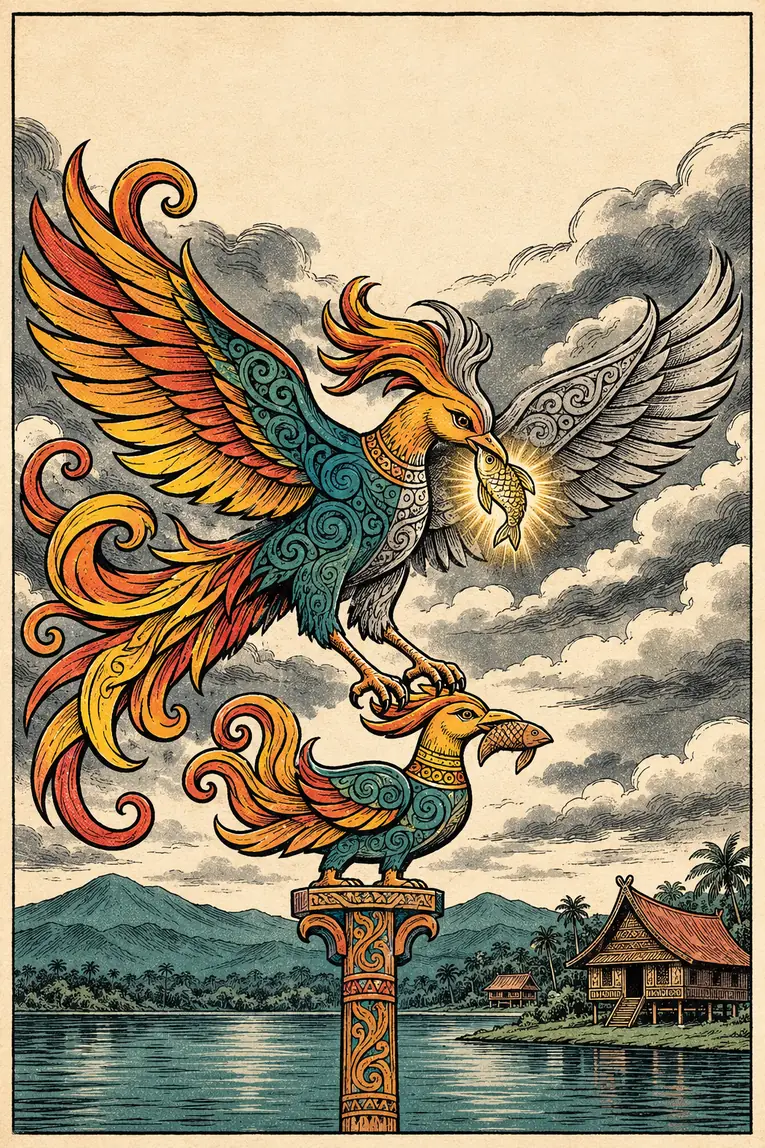
Father, I'm all right. The lake is alive because the bridge holds.Ama, ayos lang po ako. Buhay ang lawa, matibay ang tulay.
Sari... come home.Sari... umuwi ka na.
Both shores are home now. Just one thing, Father: never let the bird stand alone.Tahanan ko na ang dalawang pampang. 'Wag iwan ang ibon, Ama.
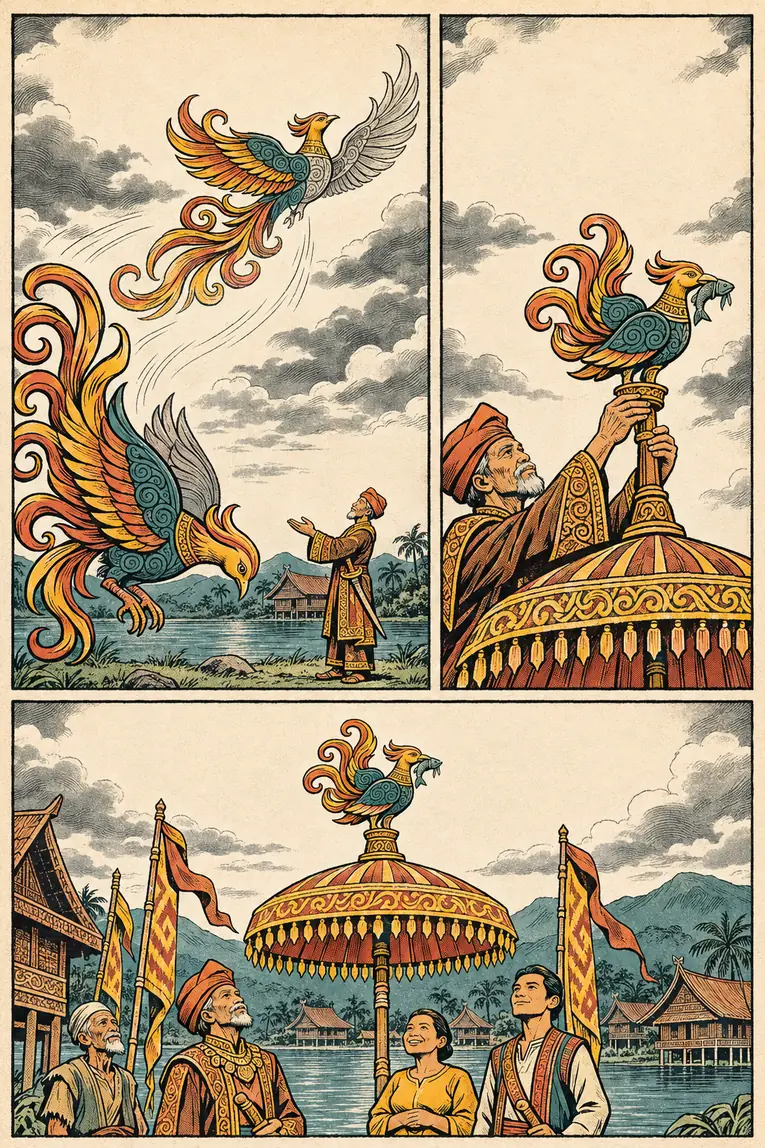
From today on, the bird stands with our flags and with our leaders.Mula ngayon, kasama ng ibon ang mga bandila at pinuno natin.
In Maranao tradition, the sarimanok is never shown alone. It stands with flags and standards, or on top of the umbrella of a sultan.Sa tradisyong Maranao, hindi ipinapakitang mag-isa ang sarimanok. Kasama nito ang mga bandila, o nasa tuktok ito ng payong ng sultan.
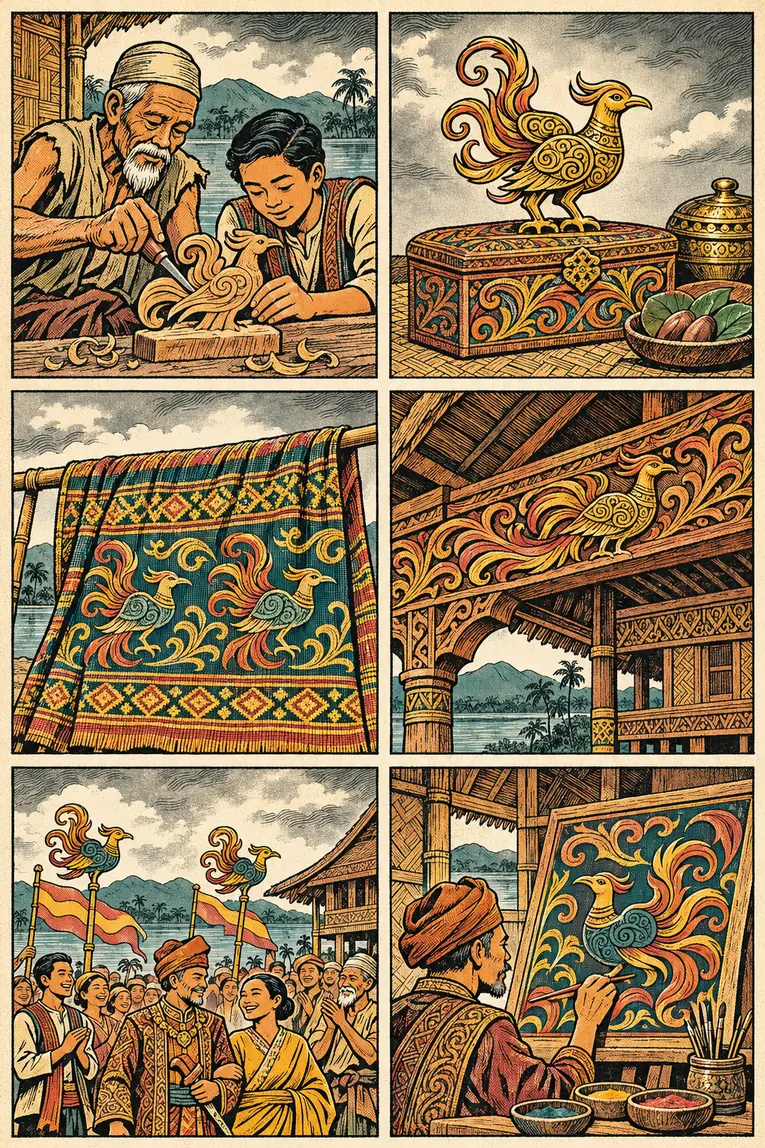
The custom was passed from hand to hand.Ipinasa ang kaugalian sa bawat salinlahi.
National Artist Abdulmari Asia Imao used the sarimanok in his work and helped make it known across the country.Ginamit ni Abdulmari Asia Imao, Pambansang Alagad ng Sining, ang sarimanok sa mga likha niya. Tumulong siyang makilala ito sa buong bansa.
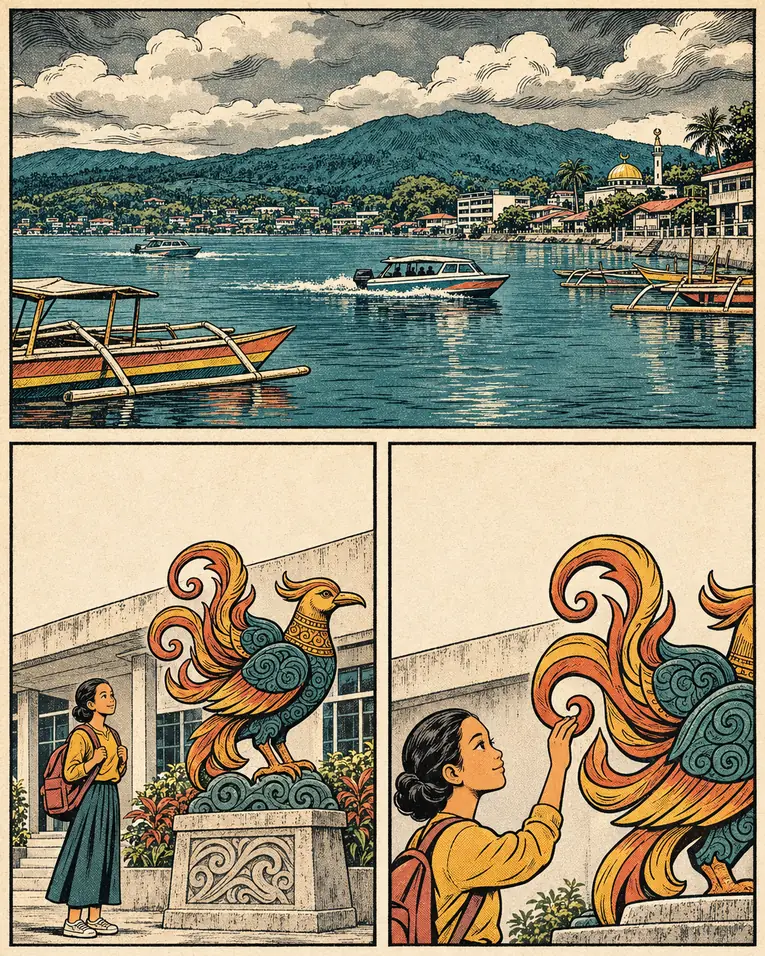
Lake Lanao, today.Lawa ng Lanao, sa kasalukuyan.
Where does it come from, Lolo?Saan po ito galing, Lolo?
From a princess who carved, they say. Every family tells it a bit differently.Sa prinsesang umuukit daw. Iba ang kuwento ng bawat pamilya.
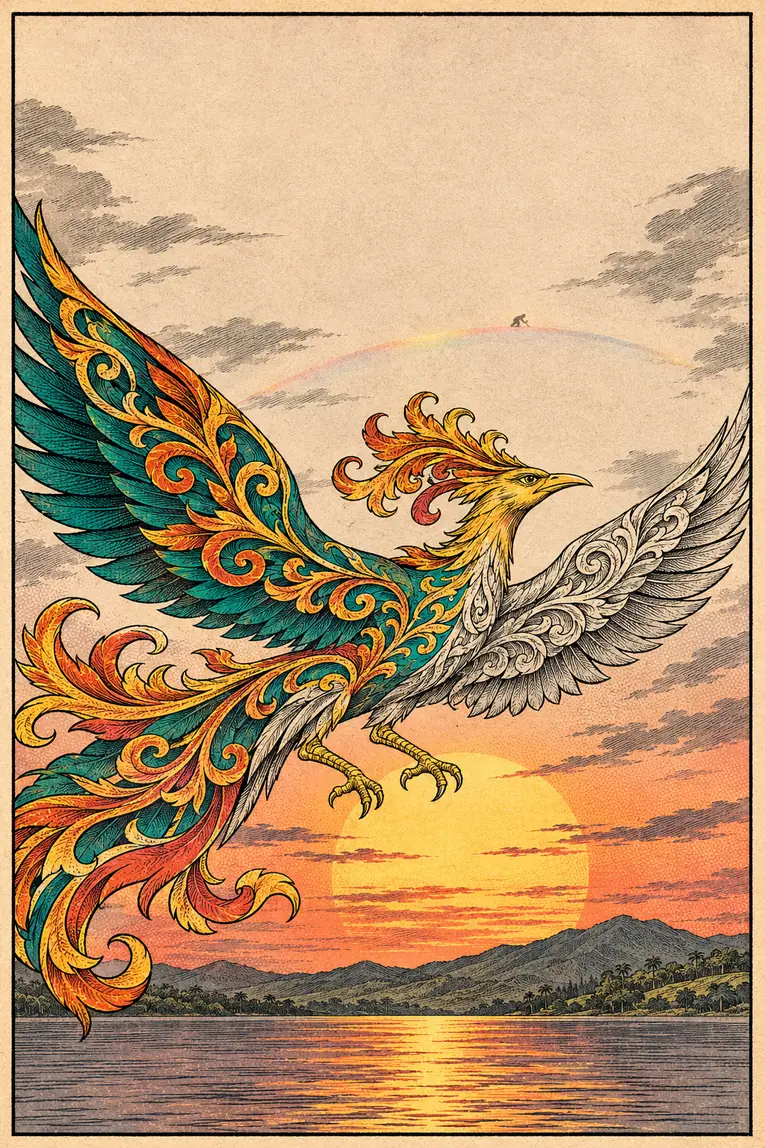
The elders say the lake has two shores. One you can see, and one you can't.Dalawa raw ang pampang ng lawa: ang nakikita at ang hindi.
And between them, a bird of many colours carries the words.At may makulay na ibong naghahatid ng mensahe sa dalawa.
The End.Wakas.