Nobela / Don't Answer the Crying
PinasDex Original, Horror
Don't Answer the CryingHuwag Mong Sagutin ang Iyak
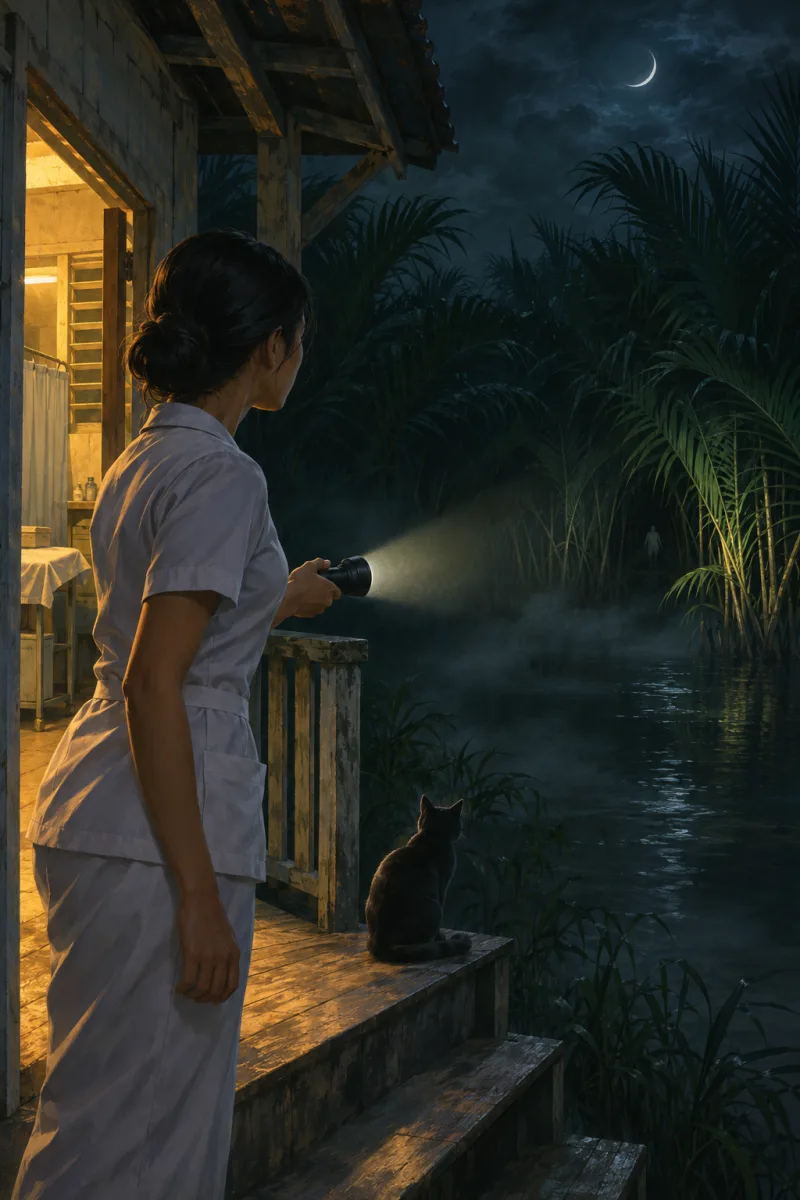
In this river town, if you hear a baby crying at night, you do not answer. Nurse Mela needs this job to pay for her father's dialysis, so she takes the night shift anyway. Then the men start walking into the nipa swamp, and the crying starts calling her name. Who is it really calling for?
Ongoing , 8 chapters outHinabang, a river town in Samar province, November 2018 to February 2019 New chapter every day at 6:00 AM
Chapters
Chapter 1 The Room With No Patients On her first night, Mela hears a newborn crying behind a locked door, and the midwife will not open it. 7 min read
Chapter 2 The Extra Plate At the cemetery, Mela's landlady sets a plate for a son nobody calls dead, and gives Mela one rule. 7 min read
Chapter 3 The Second Cry A birth goes well, until a second baby outside cries with the same breath. 6 min read
Chapter 4 The Mother With No Name A birth in the logbook has no mother, and someone in town is lying about that night. 6 min read
Chapter 5 The Partera at the Mouth A fisherman hears his unborn child calling, and the old partera looks at Mela as if she knows her. 6 min read
Chapter 6 Past the Last Light At a wake, the crying starts behind the house, and one man walks toward it. 7 min read
Chapter 7 Slippers by the Water The search finds a pair of slippers set neatly on the mud, with the wrong name on them. 7 min read
Chapter 8 Water and a Name A baby will not breathe, the lights go out, and Mela has seconds to choose what to do. 6 min read
Chapter 9 When It Sounds Far Tomorrow at 6:00 AM
Cast
Carmela "Mela" Dimaculangan A 27-year-old nurse from Lipa, Batangas, on a contract at the rural health unit. Her father needs dialysis three times a week.
Manang Iday Pabilona The health unit's midwife for thirty years. Practical, tired, keeps a key she will not lend.
Toto Gabon Utility man and driver of the health unit's old ambulance. Laughs easily. Turns his shirt inside out before he drives at night.
Lola Basing Ocenar The town's old partera, now banned from home births. Lives alone at the river mouth.
Nang Pacing Mela's landlady, a widow who still sets a plate for her son Jomar and says he is not dead, only not home.
Jomar Nang Pacing's son, twenty, a basketball player. He went fishing at the river mouth one night in September and did not come back.
Dr. Renan Abarquez The municipal health officer. Covers two towns, visits Hinabang less than he should, and says he was in Paranas.
Marivic and Edgar Tiozon A fisherman and his pregnant wife, expecting their fifth child.
Kapitan Noel Bacsal The barangay captain, whose family has run the town for three generations.
Father Ambo Lacaba The parish priest, who keeps what is left of the old church books.
Linda Dimaculangan Mela's mother in Lipa, who goes quiet whenever Samar comes up.
What is real The tiyanak as people tell it: said to be the soul of an infant who died before baptism, crying like a newborn in the dark to lure people off the path. Wearing a shirt inside out when you feel you are being led astray at night or in the wild, a common protective habit in Philippine provinces. Not answering when your name is called at night unless you can see who calls. Kalag-kalag, the Visayan observance of All Saints' and All Souls' Days on November 1 and 2, with candles and food at the graves. Wake customs: no sweeping while the dead is in the house, tears must not fall on the coffin, coffee and cards through the night, covered mirrors, and pagpag (stopping somewhere before going home from a wake), which the Tagalog nurse brings with her. The pasiyam, nine nights of prayer after a death. Emergency baptism by a lay person when a newborn may die, and the Catholic conditional form of baptism. The old practice of burying unbaptized infants outside consecrated ground. The Department of Health push for facility-based births, which bars traditional birth attendants (hilot or partera) from delivering alone. The DOH Nurse Deployment Program, which sends nurses on contract to rural health units. The amihan, the northeast monsoon from about November to February, cold and wet on Samar. Nipa palm swamps and mangroves at Samar river mouths, pump boats, and Waray, the language of Samar. Catbalogan as the capital of Samar province. Kandelaria (Candlemas) on February 2, when churches bless candles. What is new The town of Hinabang and its river are invented. All characters are invented. None is based on a real person. The plot: the disappearances, what becomes of the men in the nipa, the logbook entry of 14 September, the buried ground under the health unit extension, Mela's past and the ending. The rules of the crying (it copies a newborn's cry breath for breath, it sounds far when it is close and loud when it is far, it calls in a voice you know, and it wants an answer, because an answer lets it in) are this story's own, built on the belief. The tiny handprints in the mud and the tapping at the window are this story's own. The town's small habits around the nipa (talking only about the weather inside it, closing the river windows at night) are this story's own.